Arthritis Wrist Treatment in Morgantown, WV
Lasting Pain Relief with Wrist Fusion Surgery
When severe arthritis or a traumatic injury destroys the delicate joints of the hand or wrist, the resulting pain, instability, and weakness can make every movement a struggle. Simple tasks like gripping a steering wheel or lifting a bag can become impossible. For those suffering from debilitating wrist or hand conditions that have not responded to other treatments, fusion surgery offers a reliable path to significant pain relief and a return to function. This procedure, also known as arthrodesis, permanently joins the bones of a painful joint, eliminating motion and, in turn, eliminating pain.
Since 1977, Mountainstate Orthopedic Associates (MOA) has been dedicated to providing superior orthopedic care to the communities of Morgantown and North Central West Virginia. Our fellowship-trained orthopedic hand surgeons are experts in complex procedures like hand and wrist fusion. We believe in building strong, personal relationships with our patients to better understand their goals and deliver compassionate, individualized care. By performing these advanced surgeries at the state-of-the-art Mon Health Medical Center, we combine decades of proven experience with modern surgical excellence to help you regain a strong, stable, and pain-free hand.
If chronic hand or wrist pain is limiting your life, our specialists can provide a solution. Contact us today to schedule your consultation.
What is hand and wrist fusion surgery, and how does it work?
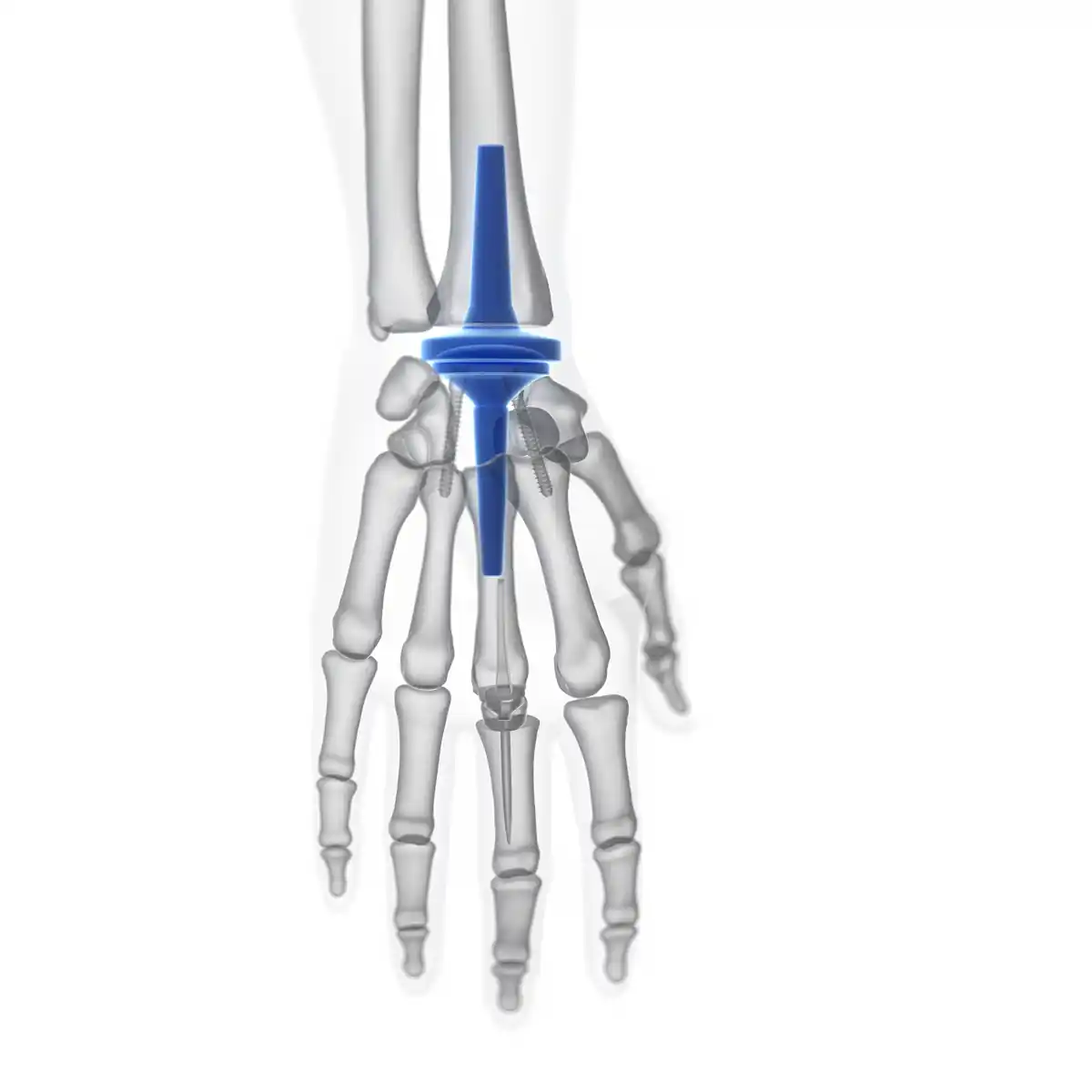
Hand and wrist fusion surgery, technically called arthrodesis, is a procedure that permanently joins, or "welds," the bones of a painful and arthritic joint together. The goal is to eliminate motion at the damaged joint, which in turn eliminates the pain caused by bone-grinding-on-bone. During the procedure, the surgeon removes the remaining damaged cartilage from the surfaces of the joint. The bones are then carefully positioned and held together with specialized hardware, such as metal plates and screws. This internal fixation holds the bones rigidly in place, allowing them to grow together into a single, solid bone over several months. While this sacrifices motion at the fused joint, it provides a stable, strong, and significantly less painful hand or wrist for gripping and lifting.
What conditions can hand and wrist fusion treat?
Hand and wrist fusion is a highly effective treatment for end-stage arthritis where the joint cartilage is completely worn away. This can be due to several causes, including osteoarthritis (wear-and-tear arthritis), rheumatoid arthritis (an inflammatory autoimmune disease), or post-traumatic arthritis that develops after a severe injury like a fracture or ligament tear. Fusion is also used to correct deformities, stabilize joints that have been severely damaged by injury, or treat chronic instability that cannot be corrected with other procedures. It is considered a "salvage" procedure, meaning it is chosen when less invasive options are no longer viable for providing pain relief and restoring function.
How do I know if I need hand or wrist fusion surgery?
The decision to undergo fusion surgery is typically made after all other conservative treatments have failed to provide adequate pain relief. If you suffer from severe, debilitating hand or wrist pain that interferes with your daily life and have not found relief from anti-inflammatory medications, splinting, and corticosteroid injections, you may be a candidate. An orthopedic hand specialist will recommend fusion surgery if you have advanced arthritis confirmed on X-rays and your primary goal is pain relief and improved strength for gripping and lifting activities. The ideal candidate understands and accepts the trade-off of losing motion at the joint in exchange for a stable and pain-free hand.
What is the recovery process like after hand and wrist fusion?
Recovery from hand or wrist fusion is a gradual process focused on allowing the bones to heal together completely. After surgery, your hand and wrist will be immobilized in a cast or splint for several weeks to protect the fusion site. You will need to keep your hand elevated to help manage swelling. Once your surgeon confirms on X-rays that the bones are healing well, the cast will be removed. At that point, you will likely begin a course of hand therapy. A therapist will help you regain motion in your fingers and other unaffected joints and will guide you through exercises to rebuild your grip strength. It can take several months for the fusion to become solid and for you to achieve your maximum functional recovery.
How much does hand and wrist fusion surgery cost?
The cost of hand and wrist fusion surgery varies depending on the complexity of the procedure, your specific insurance plan, and facility fees. The total cost includes the surgeon's fee, anesthesia, and the use of the hospital or outpatient surgery center. Because fusion is a medically necessary procedure to relieve debilitating pain and restore function, it is covered by most health insurance plans. The administrative team at Mountainstate Orthopedic Associates can help you navigate your insurance benefits and provide a clear estimate of any potential out-of-pocket expenses, so you can make an informed decision about your care.
More Questions About Hand and Wrist Surgery
Do I need a referral to see an orthopedic hand specialist at MOA?
No, you do not need a referral to schedule an appointment with one of our orthopedic hand surgeons. We provide direct access to our specialists, allowing you to get expert care for your hand or wrist condition without delay.
How quickly can I schedule an appointment for hand or wrist fusion?
At Mountainstate Orthopedic Associates, we are committed to providing timely care. We can often schedule new patient consultations much more quickly than larger hospital systems, helping you find a solution for your pain sooner.
What should I expect during a hand and wrist fusion consultation?
During your consultation, a fellowship-trained hand specialist will discuss your symptoms and medical history and perform a thorough physical exam. They will review X-rays to assess the extent of your arthritis or joint damage. Your surgeon will then explain all of your treatment options, discuss the risks and benefits of fusion, and work with you to determine the best path forward for your specific needs and goals.
What are the risks of hand and wrist fusion surgery?
While fusion is a safe and effective procedure, it carries the general risks of any surgery, including infection, bleeding, and nerve irritation. Specific risks include nonunion, where the bones fail to fuse together, which may require another surgery. There is also a risk of stiffness in the adjacent joints or irritation from the hardware. Our experienced surgeons take meticulous precautions to minimize these risks and will discuss them with you in detail.