Expert Care from Orthopedic Foot and Ankle Specialists
Comprehensive Foot and Ankle Surgery in Morgantown, WV
From the first step you take in the morning to the last one at night, your feet and ankles bear the weight of your entire life. When pain, injury, or deformity strikes, it can bring your world to a halt. Chronic conditions like arthritis, bunions, or tendon injuries can make walking unbearable and limit your ability to work, exercise, and enjoy daily activities. While many issues can be managed conservatively, some problems require surgical intervention to restore function and provide lasting pain relief. Foot and ankle surgery encompasses a wide range of procedures designed to correct structural problems, repair damaged tissues, and help you get back on your feet.
Since 1977, Mountainstate Orthopedic Associates (MOA) has been the trusted leader in orthopedic care for Morgantown and North Central West Virginia. Our fellowship-trained orthopedic foot and ankle specialists possess an exceptional level of expertise in diagnosing and treating the full spectrum of foot and ankle conditions. We combine decades of experience with a commitment to personalized care, all enhanced by our partnership with the advanced surgical facilities at Mon Health Medical Center. Explore our services below to learn how we can help you move forward.
Appointments
Our Comprehensive Foot & Ankle Services
Foot and Ankle Fracture Surgery

A broken bone in the foot or ankle is a serious injury that can happen in an instant, from a misstep on the stairs to a complex sports injury. These fractures can cause significant pain, swelling, and an inability to walk. Severe breaks often require surgery to properly align and stabilize the bones to restore function and prevent long-term complications.
Schedule an AppointmentLearn MoreAnkle Ligament Repair
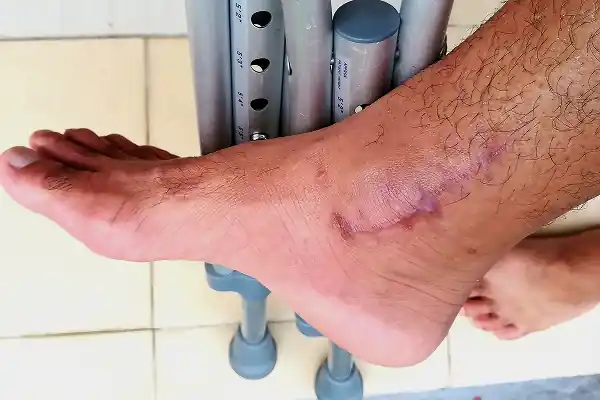
Chronic ankle instability caused by torn ligaments can limit mobility and increase your risk for further damage. Surgical repair restores stability and confidence in every step.
Schedule an AppointmentLearn MoreAchilles Repair
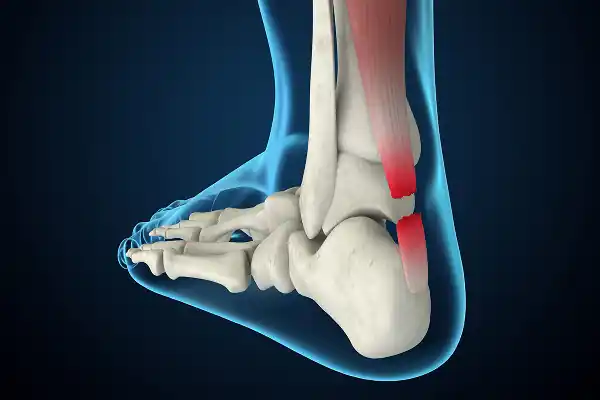
An Achilles tendon rupture can significantly impact mobility and quality of life. Surgical repair restores strength and function.
Schedule an AppointmentLearn MoreBunionectomy

Bunion removal surgery corrects the underlying deformity to relieve pain and restore proper foot alignment.
Schedule an AppointmentLearn MoreToe Deformity Surgery

Corrective toe surgery straightens rigid, painful deformities to relieve pressure and restore natural alignment.
Schedule an AppointmentLearn MoreAnkle Arthroscopy
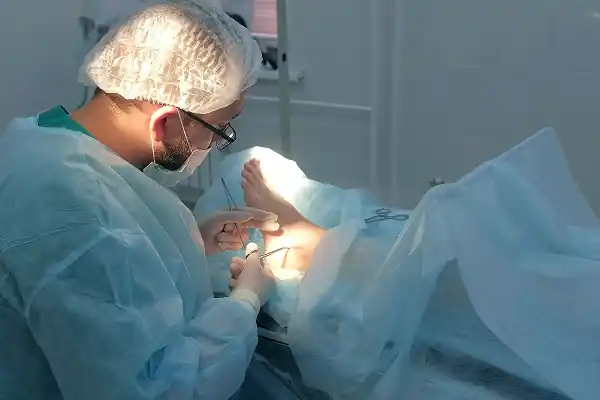
Ankle arthroscopy is a minimally invasive procedure used to diagnose and treat ankle joint problems with less pain and faster recovery.
Schedule an AppointmentLearn MoreFrequently Asked Questions
What conditions can foot and ankle surgery treat?
Our orthopedic foot and ankle specialists treat a vast range of conditions, from common deformities to complex traumatic injuries. Surgery can be the definitive solution for painful bunions and rigid toe deformities like hammertoes that cause corns and make wearing shoes difficult. It is also used to treat chronic instability from repeated ankle sprains by repairing or reconstructing damaged ligaments. For athletes and active individuals, surgery is often necessary to repair major tendon ruptures, such as a tear of the Achilles tendon or posterior tibial tendon. Furthermore, surgical intervention is highly effective for end-stage arthritis of the foot or ankle, which causes debilitating pain and stiffness. Other treatable conditions include fractures, stress fractures, plantar fasciitis that has failed conservative care, and nerve entrapment issues like tarsal tunnel syndrome.
What Is Foot And Ankle Surgery, And How Does It Work?
Foot and ankle surgery is a specialized field of orthopedics focused on correcting injuries and conditions affecting the complex structures of the lower leg, ankle, and foot. These procedures aim to alleviate pain, improve alignment, and restore mobility and function. The specific approach depends entirely on the condition being treated. For example, a surgeon might repair a torn Achilles tendon by suturing the ends of the tendon back together. For severe ankle arthritis, a surgeon may perform an ankle replacement or fusion to eliminate painful bone-on-bone friction. Deformities like bunions or hammertoes are corrected by cutting and realigning bones (osteotomy) or removing small pieces of bone to straighten the toe (arthroplasty). Many of these procedures are now performed using minimally invasive arthroscopic techniques, which involve small incisions and a camera to guide the surgery, often leading to less pain and a quicker recovery.
How Do I Know If I Need Foot And Ankle Surgery?
The decision to undergo foot and ankle surgery is made after a thorough evaluation and a trial of non-surgical treatments. You may be a candidate if your foot or ankle pain is severe, persistent, and significantly impacts your quality of life. If you have tried conservative measures such as physical therapy, bracing, orthotics, activity modification, and anti-inflammatory medications without achieving adequate relief, surgery is often the next logical step. Key indicators that surgery may be necessary include pain that interferes with sleep, an inability to walk or stand for reasonable periods, a noticeable deformity that is worsening over time, or recurrent instability that puts you at risk for falls. The best course of action is to consult with a fellowship-trained foot and ankle surgeon who can perform a comprehensive exam, review imaging like X-rays or an MRI, and help you make an informed decision.
What is the recovery process like after foot and ankle surgery?
Recovery varies widely depending on the specific procedure performed. However, a period of rest, elevation, and limited weight-bearing is almost always required to protect the surgical repair and control swelling. Many procedures will require you to be non-weight-bearing on the affected foot for several weeks, using crutches, a knee scooter, or a walker to get around. You will likely be in a cast, splint, or surgical boot to immobilize the area. As healing progresses, you will be allowed to gradually put more weight on your foot. Physical therapy is a critical component of nearly every recovery plan. It helps to restore range of motion, improve flexibility, and rebuild strength in the foot and ankle. While some minor procedures may have you back in regular shoes in a few weeks, more complex reconstructions or fusions can require a recovery period of several months to a year before you can return to all your desired activities.
How much does foot and ankle surgery cost?
The cost of foot and ankle surgery is influenced by several factors, including the complexity of the procedure, the type of hardware or implants used (if any), your specific health insurance plan, and the facility fees. The total cost includes the fees for the surgeon, the anesthesiologist, and the outpatient surgery center or hospital. Because these surgeries are performed to correct painful medical conditions that cause functional disability, they are considered medically necessary and are covered by most commercial insurance plans and Medicare. The knowledgeable administrative staff at Mountainstate Orthopedic Associates is experienced in working with insurance providers. We can help you understand your benefits and provide an estimate of any potential out-of-pocket expenses you may be responsible for.