Expert Rotator Cuff Tear Treatment in Morgantown, WV
Advanced Rotator Cuff Tears Surgery by Leading Specialists
Shoulder pain can be a constant disruption, making simple actions like reaching overhead, lifting objects, or even sleeping comfortably a significant challenge. A common cause of this pain and weakness is a tear in the rotator cuff: the group of four tendons that stabilize your shoulder joint and allow you to lift and rotate your arm. Whether caused by a sudden injury or the gradual wear and tear of daily life, a torn rotator cuff can seriously impact your quality of life. While some tears respond to conservative treatments, many require surgery to reattach the tendon, relieve pain, and restore strength and function to the shoulder.
Since 1977, Mountainstate Orthopedic Associates (MOA) has been the trusted name for orthopedic care in Morgantown and North Central West Virginia. Our fellowship-trained rotator cuff specialists are experts in minimally invasive arthroscopic repair techniques. We are committed to providing personalized, compassionate care, working closely with you to achieve your recovery goals. In partnership with the advanced surgical facilities at Mon Health Medical Center, we combine our extensive experience with cutting-edge technology to help you move past shoulder pain and get back to the life you love.
We offer faster access to appointments, so you can see an orthopedic doctor near you without a long wait.
What is rotator cuff repair, and how does it work?
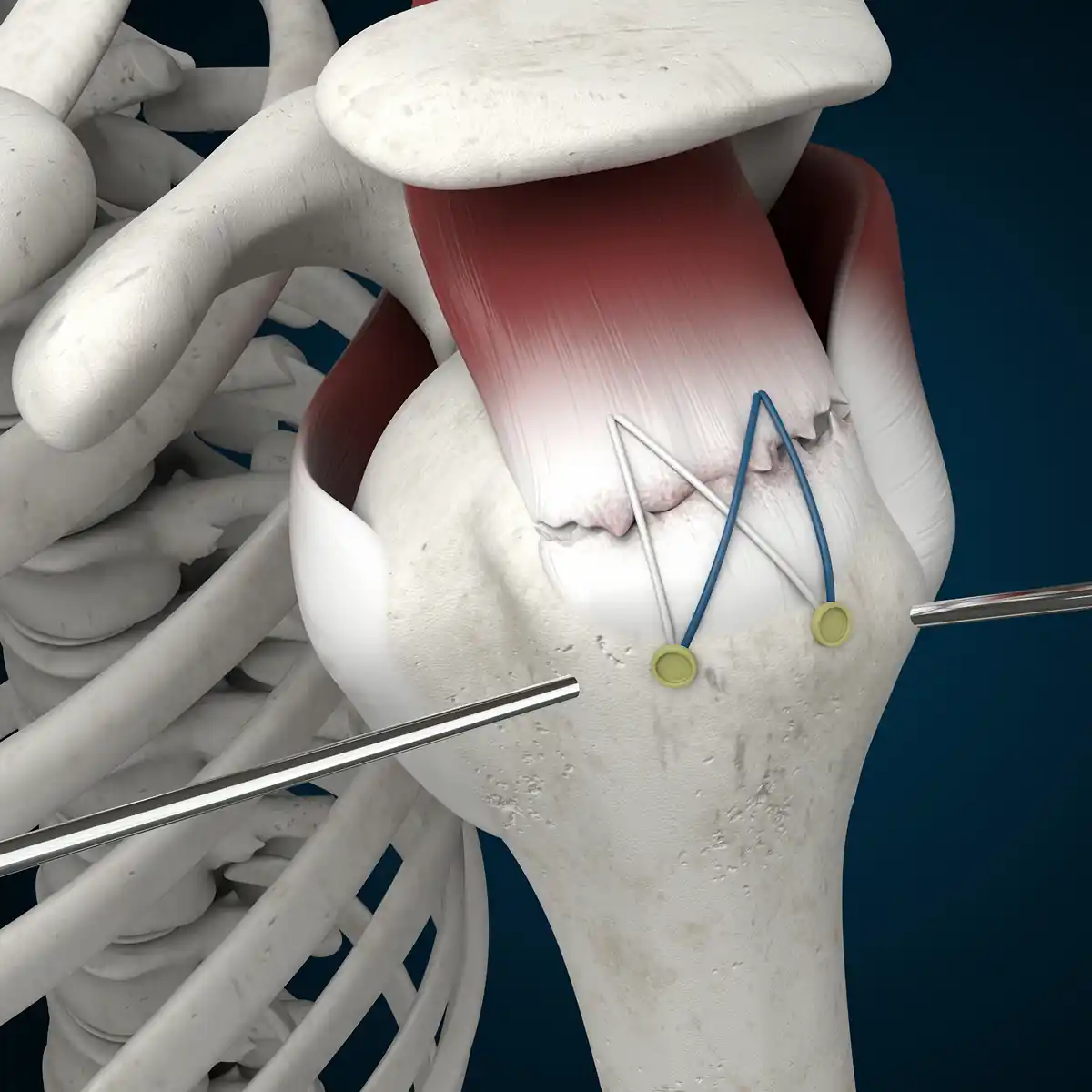
Rotator cuff repair is a surgical procedure to reattach a torn tendon to the upper arm bone (humerus). The primary goal is to restore the connection between the muscle and bone, which in turn reduces pain and improves the shoulder's strength and function. The vast majority of these surgeries are performed arthroscopically. This minimally invasive technique uses a small camera (arthroscope) and specialized instruments inserted through tiny incisions. The surgeon can view the joint on a screen and precisely repair the damage without a large, open incision.
During the procedure, the surgeon first prepares the bone by clearing away any scar tissue. Then, they place small devices called suture anchors into the bone. These anchors have strong sutures attached, which are then passed through the torn edge of the rotator cuff tendon. The surgeon tightens the sutures, pulling the tendon down securely to its original attachment point on the bone. This creates a stable environment for the tendon to heal back to the bone over time.
What conditions can rotator cuff repair treat?
Rotator cuff repair surgery is specifically designed to treat tears of the rotator cuff tendons. These tears are categorized in a few ways. They can be partial-thickness, where the tendon is frayed but still partially attached, or full-thickness, where the tendon is completely detached from the bone. Tears can also be acute, resulting from a sudden injury like a fall or lifting something too heavy. More commonly, they are degenerative, occurring gradually over time due to overuse, repetitive overhead motions, or the natural aging process, which can reduce blood supply to the tendons and make them more susceptible to injury. Surgery is typically recommended for full-thickness tears or symptomatic partial-thickness tears that have not responded to non-surgical treatment.
How do I know if I need rotator cuff surgery?
The decision to have rotator cuff surgery is made after a thorough evaluation by a rotator cuff tear specialist. You may be a candidate if you experience classic rotator cuff tear symptoms, including persistent pain in the shoulder (especially at night), weakness when lifting or rotating your arm, and a crackling sensation when moving your shoulder in certain positions. If your symptoms have lasted for several months and have not improved with conservative treatments like physical therapy, activity modification, and rotator cuff tear medication (such as anti-inflammatories or corticosteroid injections), surgery may be the next logical step. A physical rotator cuff tear test and imaging, particularly an MRI, will confirm the diagnosis and help your surgeon determine the size and severity of the tear, guiding the recommendation for surgery.
What is the recovery process like after rotator cuff repair?
Recovery from rotator cuff repair is a lengthy and structured process that requires significant patient commitment. The goal is to protect the healing tendon while gradually restoring motion and strength. Immediately after surgery, you will wear a sling for several weeks to immobilize the shoulder and protect the repair. The first phase of recovery focuses on passive motion, where a physical therapist will move your arm for you to prevent stiffness without stressing the tendon. After several weeks, once the initial healing has occurred, you will progress to active motion exercises, where you begin to move your arm on your own. The final phase involves strengthening exercises to rebuild the muscles around the shoulder. A full recovery and return to all activities can take six months to a year, depending on the size of the tear and the complexity of the repair.
How much does rotator cuff repair surgery cost?
The cost of rotator cuff repair surgery can vary based on the complexity of the tear, the type of procedure performed (arthroscopic vs. open), your specific insurance plan, and facility fees. The total cost includes the fees for the surgeon, the anesthesiologist, and the hospital or outpatient surgery center. Because a symptomatic rotator cuff tear is a medical condition that causes significant pain and functional limitation, the surgery is considered medically necessary and is covered by most health insurance plans, including Medicare. The experienced administrative team at Mountainstate Orthopedic Associates can help you navigate your insurance benefits and provide a clear estimate of any potential out-of-pocket expenses.
More Questions About Rotator Cuff Repair
Do I need a referral to see a rotator cuff specialist at MOA?
No, you do not need a referral to schedule an appointment with one of our shoulder and rotator cuff specialists. We offer direct access to our expert team so you can get an evaluation for your shoulder pain without delay.
How quickly can I schedule an appointment for rotator cuff repair?
At Mountainstate Orthopedic Associates, we are committed to providing timely care. We can often schedule new patient consultations much more quickly than larger hospital systems, helping you start on the path to recovery sooner.
What should I expect during a rotator cuff repair consultation?
During your consultation, a fellowship-trained shoulder surgeon will discuss your symptoms and medical history, perform a thorough physical exam to test your shoulder's strength and range of motion, and review your imaging studies (like X-rays and an MRI). They will explain the nature of your tear and discuss all treatment options, helping you make an informed decision.
What are the risks of rotator cuff repair surgery?
Rotator cuff repair is a very successful procedure, but it carries the general risks of any surgery, including infection, bleeding, blood clots, and stiffness. The primary risk specific to this surgery is that the tendon may not heal properly or may re-tear. Our experienced surgeons take meticulous care to optimize the healing environment and minimize these risks, which they will discuss with you in detail.