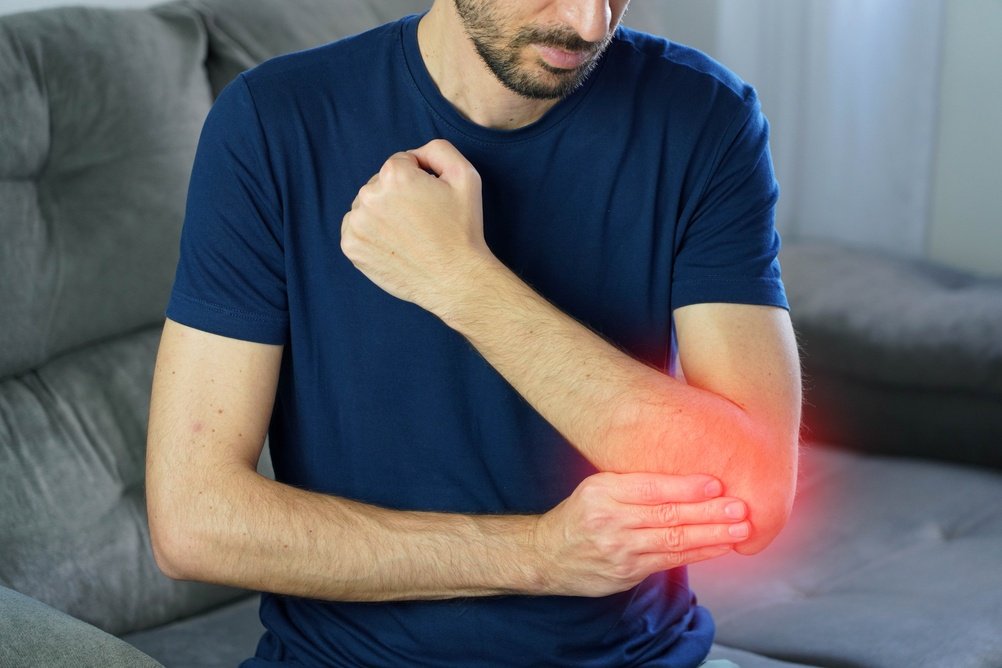
Key Takeaways
- Golfer's elbow causes pain on the inner side of the elbow, while tennis elbow causes pain on the outer side.
- Both are overuse injuries of the forearm tendons, and both are common in people who do repeated gripping, lifting, or swinging, not just golfers and tennis players.
- Most cases of both conditions get better with nonsurgical care, such as rest, ice, bracing, therapy, and injections.
- Surgery is usually considered only after several months of nonsurgical treatment have not helped.
- Mountainstate Orthopedic Associates (MOA) provides expert elbow and sports medicine care in Morgantown and North Central West Virginia, so request an appointment to find out what is causing your elbow pain.
What Are Golfer's Elbow and Tennis Elbow?
Both conditions affect the tendons (tough cords that connect muscle to bone) that attach your forearm muscles to the elbow. Repeated strain causes tiny tears and wear in these tendons, which leads to pain.
- Golfer's elbow is also called medial epicondylitis. It affects the bony bump on the inner side of the elbow, closest to your body.
- Tennis elbow is also called lateral epicondylitis. It affects the bony bump on the outer side of the elbow.
As Mayo Clinic's guide to golfer's elbow symptoms and causes explains, the two have similar causes but affect opposite sides of the elbow.
Golfer's Elbow vs. Tennis Elbow: Side-by-Side Comparison
| Feature | Golfer's Elbow | Tennis Elbow |
|---|---|---|
| Medical name | Medial epicondylitis | Lateral epicondylitis |
| Where it hurts | Inner side of the elbow | Outer side of the elbow |
| Motions that strain it | Forceful wrist and finger bending, gripping, throwing | Repeated wrist extension (bending the wrist back), gripping |
| Common age range | Usually 40 to 60 | Usually 30 to 50 |
| Common symptoms | Inner elbow pain, weak grip, possible tingling in the ring and little fingers | Outer elbow pain, weak grip, pain with gripping or shaking hands |
| First-line treatment | Rest, ice, bracing, stretching and strengthening | Rest, ice, bracing, therapy |
Signs and Symptoms of Each Condition
Golfer's Elbow Symptoms
- Pain or burning on the inner elbow that may spread down the forearm
- Weak grip strength
- Stiffness and pain when making a fist
- Numbness or tingling in the ring and little fingers
According to OrthoInfo's guide to golfer's elbow, symptoms often develop slowly and get worse over weeks to months. The ulnar nerve (the 'funny bone' nerve) can also become irritated near the inner elbow.
Tennis Elbow Symptoms
- Pain or burning on the outer elbow
- Weak grip strength
- Pain that gets worse when gripping a racquet, turning a wrench, or shaking hands
- Sometimes pain at night
Who Gets Golfer's Elbow and Tennis Elbow?
Despite their names, most people with these conditions are not pro athletes. OrthoInfo's guide to tennis elbow notes that painters, plumbers, carpenters, auto workers, cooks, and butchers are also at risk. Mayo Clinic lists construction, plumbing, and carpentry work as common causes of golfer's elbow, along with throwing sports and weight training.
For West Virginia patients, everyday triggers may include:
- Swinging a hammer or using power tools on the job site
- Pitching in high school or rec league baseball and softball
- Splitting firewood or doing farm chores
- Playing golf, tennis, or pickleball with poor technique or the wrong equipment
Mayo Clinic also lists repeating the same motion for two or more hours a day, being overweight, diabetes, and smoking as risk factors for golfer's elbow.
How Golfer's Elbow and Tennis Elbow Are Diagnosed
A doctor will ask about your work, sports, and the tasks that cause pain. During the exam, the doctor presses gently on the inner and outer elbow and tests your wrist and finger strength against resistance. Where the pain shows up helps tell the two conditions apart.
Imaging is not always needed, but it can help rule out other causes:
- X-rays to check for elbow arthritis
- Magnetic resonance imaging (MRI) or ultrasound to look at tendon damage
- Electromyography (EMG), a nerve test, to check for nerve pressure
Mountainstate Orthopedic Associates offers in-office X-rays, so imaging can often be done at your first visit.
Nonsurgical Treatment Options for Elbow Tendon Pain
The good news is that most cases improve without surgery. OrthoInfo reports that approximately 80 to 95% of tennis elbow patients have success with nonsurgical treatment, and that most cases of golfer's elbow can also be treated without surgery.
Common options include:
- Resting from the activity that causes pain
- Ice in short sessions
- Nonsteroidal anti-inflammatory drugs (NSAIDs), if safe for you
- A counterforce brace (a strap worn just below the elbow)
- Physical therapy with stretching and strengthening exercises
- Steroid injections, used sparingly
- Checking your technique and equipment for sports
Tips to Help Prevent Elbow Tendon Pain
Mayo Clinic suggests a few simple habits that can lower your risk:
- Strengthen your forearm muscles.
- Warm up and stretch your wrists before sports or work.
- Use good technique, and ask a coach for feedback if needed.
- Choose equipment that fits you, such as lighter golf clubs or a properly sized racket grip.
- Stop and rest when your elbow starts to hurt, since pushing through pain can make it worse.
PRP and Biologic Treatments at Mountainstate Orthopedic Associates
Mountainstate Orthopedic Associates offers MOA's platelet-rich plasma (PRP) injections for both tennis elbow and golfer's elbow. PRP uses a small sample of your own blood. It is spun in a machine to concentrate platelets (blood cells that help with healing), then injected into the sore tendon, often with ultrasound guidance.
What to expect:
- Avoid NSAIDs for 1 to 2 weeks around the procedure.
- Soreness for a few days afterward is common.
- Full benefit can take several months.
- Most insurers and Medicare consider PRP 'investigational,' so it is usually paid out of pocket. MOA's staff share pricing up front.
OrthoInfo notes that study results on PRP for tennis elbow are mixed, so it is worth talking through the pros and cons with your provider. You can learn more about MOA's full range of biologic treatments for tendon and joint pain.
When Surgery May Be an Option
Surgery is usually a last resort. OrthoInfo states that tennis elbow surgery is considered if symptoms do not respond after 6 to 12 months of nonsurgical treatment. For golfer's elbow, OrthoInfo notes surgery may be considered when symptoms have not improved after at least several months of nonsurgical care.
Tennis Elbow Surgery at MOA
Mountainstate Orthopedic Associates offers MOA's tennis elbow surgery for people whose pain continues after rest, ice, and bracing. OrthoInfo explains that surgery typically removes damaged tendon and reattaches healthy tendon to the bone. Light strengthening usually starts about 2 months after surgery, with a return to sports usually 4 to 6 months after surgery.
Find Relief From Inner or Outer Elbow Pain in Morgantown, WV
Golfer's elbow and tennis elbow affect opposite sides of the elbow, but both usually respond well to nonsurgical care. Mountainstate Orthopedic Associates can pinpoint the cause of your pain and build a treatment plan that fits your work and activities.
Ask Mountainstate Orthopedic Associates about PRP injections for tennis and golfer's elbow or tennis elbow surgery, and request an appointment with MOA today.
Frequently Asked Questions
How can I tell if I have golfer's elbow or tennis elbow?
The location of the pain is the biggest clue. Golfer's elbow hurts on the inner side of the elbow, while tennis elbow hurts on the outer side. An orthopedic exam can confirm which one you have.
Can you have golfer's elbow and tennis elbow at the same time?
It is possible to have pain on both sides of the elbow, especially with heavy repeated use. A provider can examine each side and recommend the right treatment.
How long does golfer's elbow or tennis elbow take to heal?
Both often improve with rest and treatment, but healing can take weeks to months. Symptoms often build slowly, so recovery is usually gradual too.
Does PRP work for tennis elbow?
PRP is one option for tennis elbow and golfer's elbow, and Mountainstate Orthopedic Associates offers it for both. OrthoInfo notes that study results are mixed, so talk with your provider about whether it fits your case.
Where can I find an elbow specialist near me in Morgantown, WV?
Mountainstate Orthopedic Associates treats elbow pain at offices in Morgantown, Bridgeport, and Fairmont. No referral is needed, and in-office X-rays are available.
